
The Greatest Show IS Earth

Greatest ShowScientists Oliver Pergams and Patty Zaradic have coined the term “videophilia” to describe “the new human tendency to focus on sedentary activities involving electronic media”.1 So humans now seem to suffer from an ailment involving a craze for nature as delivered through various media–TV shows, movies, magazines, pictures, etc. Rather than getting out and getting dirty, many folks are “experiencing” the natural world from the comfort of their couch, remote in hand, HDTV set to “stunning,” sound system at full blast, and snacks and drinks within arm’s reach. Lights! Camera! Action!

Having received the Planet Earth complete series on DVD as a birthday gift this year, I have witnessed just how fascinating and enlightening these presentations of the Earth can be. After watching the series (I was hooked after the very first episode), I felt a newfound respect for the Earth; equally powerful was a sense of dedication to preserving all of those wonderful things that the show explored. And there is no way I would have been able to go to the Himalayas, to the African deserts, to the depths of the oceans, to both poles, or to so many other places. Simply put, this birthday gift was one of the best I have ever gotten. (THANKS MOM!)

Through secondhand knowledge (I do not own a television myself), I understand just how popular nature-related programs have become on TV. Thanks to channels like Animal Planet, the Discovery Channel, and PBS, the Earth has become quite a “celebrity” on the small (and, in some cases, big) screen. Like me with Planet Earth, then, millions of people across the planet are gaining new insights about the planet they live and depend upon; perhaps they are gaining newfound respect and love for that planet, too.

So I commend all of these media outlets for what they have done in making the Earth a modern-day pop star. At their best, they provide knowledge that would never be acquired (or even pursued?) otherwise.

But, skeptic and pessimist and Luddite that I am, I have to agree with Pergams and Zaradic in their concerns about this outbreak of videophilia. Those same HDTV screens can be double-edged swords, since the comfort and convenience of nature-on-the-screen all too easily makes the real natural world dispensable, as it were. Why go outside and look at the same old trees and flowers and birds and critters when you can see exotic species, faraway landscapes, and unsolved mysteries in a climate-controlled, hi-def, fully snacked world inside your house? Why bother preserving nature if it is already “preserved” on a DVD or TV reruns?

Read the rest of this entry »

Film Review- A Convenient Truth: Urban Solutions from Curitiba

curitiba-front-web-a-convenient.jpgWhen discussing the world most progressive “eco” cities one might toss out San Francisco for it various green initiatives (such as banning plastic bags), New York City for its effective subway system, or Munich with it’s use of alternative energy especially solar but after watching this recent documentary “A Convenient Truth: Urban Solutions from Curitiba” some people may change their green tune. The film highlights the surprisingly progressive sustainable city and using urban examples to highlight various topics into well paced film.

First time director Giovanni Vaz Del Bello neatly divides the film down into four areas of innovation: Transportation, Recycling, Affordable Housing and Urban Parks. Convenient Truth shows how convenient the transportation remains in this million plus city. Their progressive mayors like Jamie Lerner, city planners and designers determined that the city should revolve around people, not cars. From the cost-effective yet expansive bus system (with the notable bus station tubes) to the pedestrian-only walkways, then documentary highlights how effective, people friendly and sustainable changes can be made with minimal or no cost.

Read the rest of this entry »

Earth: Our Sacred Trashcan

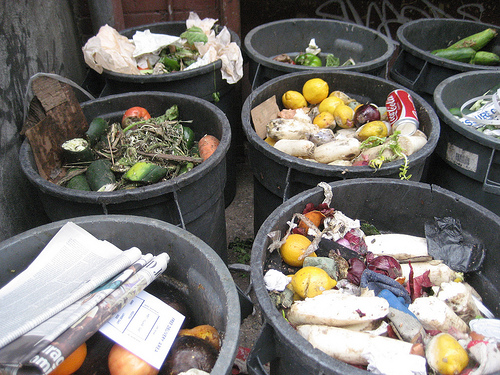
TrashOnce upon a time, I came to a stop at the intersection of two country roads on the outskirts of Charlottesville, Virginia. Dutifully and lawfully stopped in my car, dutifully and lawfully looking both ways before turning, I happened to notice a scattering of plastic cigar tips on the pavement.

At first I was perplexed: Why would someone empty his or (less likely) her ashtray at an intersection? And why cigars?

But then my confusion turned to consternation. Here I was, stopped atop a pile of someone’s waste after having just driven over the mighty Rivanna River, with mountains and trees and blossoms and birds and blue sky virtually enveloping my senses, and now plastic cigar tips present themselves to my perception!

Alas, my heart sank like a stone in that roiling river I had just traversed.

Ever since that traumatic experience in an otherwise idyllic setting, the presence of human detritus has grown ever more prominent in my environmental awareness. Fast-food containers, plastic grocery bags, soda-pop bottles, sometimes even car parts—-here, there, everywhere, it seems that humanity is only visible in the things it has thrown away.

Almost everywhere nowadays, not just in my fairly rural locale, any patch of grass or stand of trees seems be a field of litter waiting for harvest.

But the farmers and the field hands seem to be sleeping in this season.

Read the rest of this entry »

Low Impact Living: Five Eco-Smart Ways to Spend Your Tax Rebate

young woman holding moneyEditor’s note: Hopefully, a tax rebate or economic stimulus check is in the mail for you. Our friends at Low Impact Living have some ideas on ways to invest that money in your home… and the environment. This post was originally published on Monday, May 12, 2008

We know that many of us will need to spend our tax rebate check on critical items like food or rent or paying off debt. But just in case you have some of your tax rebate check left and you’re looking for eco-friendly ways to spend the money, we have some ideas we’d like to share with you.

And we’ve geared these tips to supporting the US economy, so you get to do the right thing for the planet and be an eco-patriot at the same time! In coming up with our list of ideas we decided it would be good to recommend ideas that reduce our negative environmental impacts but also support US manufacturers and service providers. So here are five eco-smart ways to use your rebate to support the Earth, the US economy, and save your household money in the long run.

1. Buy a high-efficiency water heater. A high-efficiency water heater can cut your energy use, water use, carbon footprint and even utility bills (over the long run). For most homes you can get the heater itself for $600 - $1,200, but you’ll probably have to spring for installation as well. Models made in the US include the AO Smith Vertex (a storage model that beats the pants off of tankless HW heaters), electric models made by American Tankless Water Heaters, and natural gas tankless heaters made by Rheem (some made in the US). Click here to learn more about making the tankless decision, and click here to find local installers.

Read the rest of this entry »

Tonight on “The Green”: Recycling — Beyond the Blue Bin

Ken Wells and Nancy Jo Craig, both featured in “Recycle” episode of Sundance Channel’s Big Ideas for a Small PlanetDo you recycle?

The seemingly innocuous question comes with all sorts of ethical baggage these days: for many Americans, recycling is not just an initial step into a greener life, but also an activity suffused with moral weight. While many will argue about the significance of individuals and families recycling items they might otherwise throw away, there’s no doubt that creative and innovative reuse of materials is critical for the health of the planet… and the people who reside on it (along with all of those other species). Tonight, the Sundance Channel’s Big Ideas for a Small Planet goes beyond the blue bin many of us place on the curb, and looks at three organizations that are taking recycling in some interesting, and effective, directions.

Read the rest of this entry »

Herbs for Health: Endangered Echinacea

echinacea puperea flowersEditor’s note: Last week, we published a piece by our editorial intern Oscar Cardenas on the endangered status of many herbs used in alternative health practices. Today, we’re pleased to give you Oscar’s second piece on the subject, which focuses on the popular herb Echinacea.

Imagine an organism, native to the American prairie, whose value to people prompted wholesale hunting to fill the demands of a niche market. In the period of roughly a decade and a half, consumers managed to rediscover and exploit natural reserves of this species which had originally been utilized by Native Americans in the eastern United States. The organism, echinacea (not the American bison), consists of 9 species of plants, some of which are recognized as endangered by federal and state authorities.

What Is Echinacea and How Does it Work?

The blanket term echinacea usually refers to three species of this plant: Echinacea angustifolia, Echinacea purpurea, and Echinacea pallida. All three varieties are native to North America and are often packed into individual or homogenized mixtures that are marketed as immunity boosters and touted to either prevent colds or lessen their impact/duration. Echinacea can be used preventatively or post-exposure to shorten the duration of colds when the rhinovirus (the cause of the all-too-common cold) has invaded and incubated, causing symptoms (the sniffles). Doses are delivered orally and come in the form of tinctures, pills, or drinks with intake instructions specific to the product listed within the packaging.

Read the rest of this entry »

Low Impact Living: Twelve Tips for Eco-Friendly Lawn Care

green grass with a ray of sunshineEditor’s note: While many will argue that there’s no such thing as an “eco-friendly lawn” (with justification), the grass covered yard is still a staple of most homes. Today, our friends at Low Impact Living have some tips for “greening” your lawn… while keeping it green. This post was originally published on May 7, 2008.

Summer is just around the corner, and this is the time of year when we really ramp up our lawn activities– watering, fertilizing, mowing, etc. And all of these can have major negative environmental consequences. Did you know that over 50 million Americans mow their lawns each weekend, and contribute as much as 5% of the country’s air pollution? And it’s staggering to realize that the average American grassy lawn can use over 20,000 gallons of water each summer! So, a major part of any green home strategy should be to embrace eco-friendly lawn and garden care.

Here are 12 ways you can make sure you have an eco-friendly lawn this summer

1. Collect rain water and use it for your plants. Getting a rain barrel or two for your yard is a simple way to collect and reuse Mother Nature’s water. Just put it under your gutter’s down spout and you’ll be amazed how fast it fills up. Click here for rain barrels.

2. Make sure you’re not over-watering. Most of us over-water our lawns. Do you have moss growing on your driveway or sidewalk or in your garden? That’s a sign you’re watering too much. Do you have pools of standing water anywhere? Another sign. You can buy a very inexpensive lawn moisture meter that will tell you if you’re over-watering. You might also consider getting an intelligent irrigation control system that attunes your watering to the weather and your lawn’s needs.

Read the rest of this entry »

Ten Ways to Change the World Through Social Media

Max Gladwell Logo

Editor’s note: We’re pleased to welcome Max Gladwell, of MaxGladwell.com, as a regular guest writer on sustainablog. Max Gladwell covers the nexus of social media and green living. We feel that these two trends and technological developments hold tremendous promise for improving quality of life for everyone on the planet.

If you’re reading this blog, then you’re on board with social media. There’s a good chance you belong to social networks like Facebook or MySpace. It’s likely that you Digg stories and even possible that you Twitter. These technologies and services, together with a growing number of others, make up the social web. It’s much like the regular web, but more interactive. More…social. It invites and even demands active participation from everyone. It has a global reach with viral capacity, and yet it’s bringing local communities closer together. It enables people to connect, organize, and make a difference as never before. Indeed, social media is a powerful force, one that the world’s CEOs are starting to acknowledge and take seriously.

Many entrepreneurs, activists, and marketers are leveraging the social web for positive change. In the process and by its very nature, they are giving each of us the tools to change the world and make it a better place. There are thousands of examples, which is precisely why Max Gladwell exists. Here are 10 worth exploring.

Read the rest of this entry »

Why Can’t Every Product be Sustainable?

timberland-boots.jpgIf you go to the mass retailers today, it’s likely that you’re going to pay more for sustainably designed, developed, manufactured and shipped products. In some cases, like my Timberland boots, the products will be superior in all ways that matter and the sustainable attributes will be an added-value. But in most cases the product will either be harder to find, quicker to wear-out or less aesthetically pleasing than the less-sustainable competition.

It’s tempting to point out the many examples beyond my Timberlands, which are sustainable without the sacrifice or the bloated price tag. Sure, they exist but they are the minority–a miniscule struggling minority. If we all start to question why, we can shift every product manufactured towards a more sustainable approach. Every product.

Read the rest of this entry »

Meditation on Mother’s Day

Earthrise

She goes by so many names:
Mother Nature.
Mother Earth.
Mother Goddess.
Gaia.

She takes so many forms:
The dance of the seasons.
The ripples of a river.
The textures of a mountain range emblazoned by the morning sun.
The crash of a wave on sand.

She is very old yet laughs with the voice of a babe.

She dies continually yet is continually reborn.

She is
mother and daughter,
womb and tomb,
cradle and grave,
virgin and lover,
begetter and betrayer.
She is all of these things.
She is what She is.

And so when I wake on this day, I sense Her there to greet me.

She
stirs me,
embraces me,
warms me,
feeds me,
supports me,
protects me,
entertains me,
teaches me,
guides me,
cleanses me,
rocks me,
and tucks me in to sleep.

And so on this day, I give thanks to Her in all of Her forms.
I kiss her as my Mother and my Lover.
I learn from Her as my Teacher and my Guide.
I bow to Her, in all of Her awesome splendor, with piety and devotion.

Read the rest of this entry »

Today’s Sponsor